
| Specs Overview | |
|---|---|
| Type | Masticating Juicer |
| Price | $$$ |
| Juice Quality | High |
| Juice Shelf Life | 72 Hours |
| Motor | 80 RPM, 1/4 horsepower |
| Wattage | 200 Watts |
| Dishwasher Safe | No |
| Pulp Ejection | External |
| Chute Size | 2.25 x 1.5 inch (crescent) |
| Build | BPA Free Plastic |
| Design | Vertical/Upright |
| Color | Silver - VRT370HDS Chrome - VRT380HDC |
| Noise Level | Low |
| Warranty | 10 Years |
| Best for Juicing | Soft & Hard Produce, Citrus Fruits, Leafy Greens, Nuts & Beans |
| Application | Home & Personal Use |
| Rating | |
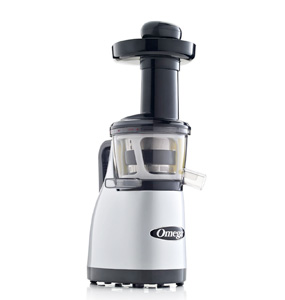
Don’t get confused with Omega VRT370HDS and Omega VRT380HDC, these models are identical. ‘S’ stands for silver, and ‘C’ stands for Chrome which is a pretty common naming convention for Omega juicers to designate color. Usually ‘R’ stands for red. This series is the successor of Omega VERT 350 lineup which are stronger and meaner machines with 1/4 HP motor, a 5% increase from their predecessor’s 1/5 HP.
These machines are vertical masticating juicers with a single-style auger utilizing a dual stage squeezing process to extract the maximum yield of juice during the juicing process designed to safely and efficiently extract juice full of antioxidants, nutrients, and vitamins. You can choose between two pristine finish, Chrome and Silver, it’s worth noting that the Chrome version is a little bit expensive. Being compact, it takes up less counter space when compared to horizontal masticating juicers weighing 22 pounds, but was built with a handle for ease of transport.
Another great thing about these juicers is that all of the plastic parts that touch your food are BPA-free. The feed chute is about 2 3/8 inches by 1 1/2 inches in diameter. The heavy-duty Ultem auger crushes and squeezes a variety of produce at 80 RPM, rotating and pressing it against the Ultem mesh juicing screen. Ultem plastic is eight times harder than other plastics, making it extremely durable and able to withstand hard, dense produce. The Auto-Cleaning System allows you to juice continuously by keeping the mesh screen free of any pulp buildup.
Another upgrade from this series is you have an option to purchase a separate coarse juicing (at least according to the manual). Coarse juicing screen allows more pulp to be incorporated to your juice and makes it easier to juice soft fruits. The manual also suggests that these juicers have a juice tap where in fact it doesn’t have one.
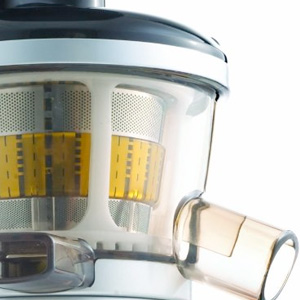
The auto cleaning system allows you to juice different kinds of fruits and vegetables without having the need to disassemble it. Just pour one or two cups of water into the feeding chute while it’s operating then you’re good to go for your next batch of fruits and veggies.
Pros
- Stronger motor than the 350 series which makes it more efficient for processing wheatgrass
- You can choose between a silver, or chrome finish
- Highly compact design
- Super quiet operation
- Higher juice yield and nutrient retention
- 72 hours juice shelf life
- Slow 80 RPM minimizes oxidation
- Self cleaning system
- Ultem auger & Ultem juicing screen
- All parts that come in contact with food are BPA free
- Continuous juicing with automatic pulp ejection
- Can make soy and almond milk
Cons
- Mid-priced but still in the affordable range
- Can get clogged if you don’t cut your produce into small pieces
- Masticating juicers are generally slow, add the time it takes to cut your produce and it will get even slower
Click here to read more feedback and reviews about this Juicer on Amazon.com
Features & Product Details
Is it Easy to Use?
Setup is simple and takes less than a minute once you understand the process. Operating it is just as easy. There are a few tips to consider when you begin the juicing process. Even though the feed chute is larger than most horizontal masticating juicers, it is still imperative to prepare your produce accordingly. Some produce needs to be cut into smaller pieces to ensure it moves through the juicer without jamming it or becoming stuck in the bowl. For example, cut up carrots and celery into smaller pieces. Carrots are extremely dense and smaller portions make the juicing process effortless for your machine. Celery and similar stalks have long fibrous pieces that will wrap around the auger. Eliminate that issue by cutting it into one-inch pieces. This juicer is self-feeding, using gravity to suck the produce into the bowl. All you have to do is drop the items in and watch it work. Alternate soft and hard items to ensure the pieces move through the machine. Do not move too fast or it may become obstructed. If you experience a jam, turn it off, and reverse the auger to unclog it. Keep an eye on the pulp ejection spout. As long as the pulp is still flowing, then you’re in business.
Is it Easy to Clean?
Though these juice extractors are not dishwasher safe, cleanup is very easy. I highly recommend taking a minute to scrub the pulp off the mesh juicing screen because if the pulp hardens on it, it will be extremely difficult to remove. If you have time to wash the juicer parts, then submerge everything in hot, soapy water after you have finished juicing. Use the cleaning brush, which kind of resembles a stiff toothbrush, and scrub the pulp off of the juicer parts. Again, pay attention to the mesh screen. If you ever find that pulp has dried on the screen, soak it in hot, soapy water for approximately ten minutes to soften the pulp to make cleaning easier. However, if you continuously allow pulp and juice to dry on the parts of the juicer, then sediment will build up over time, making it more difficult to remove. Take the time to clean, or at least rinse, your juicer parts to keep them sediment-free.
Juice Quality
These vertical masticating juice extractors pull juice from produce using a dual-step juicing process. It crushes the produce, and then presses it against a juicing screen that further separates the juice from the pulp. This method preserves the essential nutrients and vitamins we need for our bodies. The nutrients are not damaged in the extraction process, therefore oxidation and degradation are delayed. Use a strainer to remove excess pulp or you can also pour it back through the machine. The mesh screen makes for an excellent strainer. To reap the full benefits of the juice, drink it as soon as you can. If you like to make batches of juice or you find you have more than you plan to drink, you can safely store it in the refrigerator for up to 72 hours. Make sure to fill the container as close to the brim as you can and use a tightly sealed lid to lock in the full flavor and nutrients of the juice. Glass containers are recommended, but plastic and stainless steel are fine to use for storage.
What Kinds of Produce Can it Juice?
All types of produce can be processed by this juice press such as hard produce, soft fruits, grasses and leafy greens, and citrus fruits.
Hard produce include garlic, pear, celery, cilantro, broccoli, carrots, coconut, fennel, beets, bitter gourd, turmeric, pineapple, apple, ginger, watermelon, yakon, asparagus, cucumber, cauliflower, sweet potato, pumpkin and pepper.
You can turn soft fruits such as tomato, avocado, peach, grapes, strawberry, kiwifruit, blackberry, mango, pomegranate, cranberries, melon and papaya into a puree using this machine but you might need a coarse juicing screen.
Leafy greens include kale, cabbage, wheatgrass, dandelion greens, lettuce, parsley, spinach, pine tree needles, brussels sprout, collard greens, moringa, peppermint, basil, beet greens and spring onion.
Citrus fruits include tangerine, orange, lemon, mandarin, grapefruit and lime.
It can also help you make soy and almond milk, just make sure to soak your nuts or beans before processing it using this machine
Verdict
Omega VRT370HDS and Omega VRT380HDC Nutrition System are excellent all-around juicer because they are capable of juicing a wide variety of produce, including leafy greens and wheat grass. Although, leafy greens and wheat grass need to be cut into smaller pieces since you cannot shove them into the feed chute and expect them to juice properly. Use celery or some other dense item to help it through the juicer. If you prefer to juice only greens and wheat grass, then a triturating (twin gear) or horizontal masticating juicer is probably a better option. You will notice this juicer produces a high volume of juice and the expelled pulp is dry.
Something to think about, this is not a fast juicer. You will require at least 10 to 20 minutes of prep and juicing time. You also have to think about how long it will take you to clean the parts. If you are short on time in the morning, consider juicing the night before or even purchasing a centrifugal juicer instead. Centrifugal juicers extract juice in a matter of a few minutes. Homemade juice is always going to have more nutrients and tastes better than store bought juice. You can order this juicer from the Omega website for about $380, but you can pick it up for less than that elsewhere with coupons or on sale. You may even be able to locate a refurbished model. Omega VRT370HDS and VRT380HDC are worth looking into if you want a compact juicer that can handle daily juicing. Happy juicing!